Help researchers understand if it’s safe to take a second dose of rimegepant to relieve persistent migraine pain
For many people, a single dose of their prescribed migraine treatment (acute treatment) is usually enough to relieve their pain and other symptoms. But some people experience persistent migraine pain or symptoms that return within 24 hours which require additional treatment.
We’re researching if taking a second dose of rimegepant (the study medicine) is safe and effective for adults who need additional treatment within 24 hours to manage their migraine attack.
Who may participate
You might be able to take part in this trial if you:
- Are 18 years of age or older
- Have experienced migraine attacks for at least 1 year
- Have had migraine pain for 6 to 14 days each month for the last 3 months
- Currently use a medicine to treat migraine attacks when they happen
There are other requirements that the study team will discuss with you.
Condition
Migraine
Age
18+ years
Each clinical study has its own guidelines for who can participate, called eligibility criteria. However, only the research study staff can determine if you qualify to enroll in the study.
What to expect
If you decide to take part, the trial will begin with a 4-week Screening Period. The study team will do some tests to make sure the trial is a good fit for you. You will also use an electronic diary to complete a few questions every day for 4 weeks about your migraine attacks, any other headaches you experience, and whether you took headache medication. The Treatment Period lasts 24 weeks. You will be given the study medicine to take when you have a migraine attack. There is no placebo (inactive treatment) used in this study.
If you are not pain‑free about 2 hours after taking the first dose, or if the pain goes away and then comes back, you may take a second dose within 24 hours of the first dose. You will continue to complete the electronic diary every day.
You will have a follow-up visit 4 to 5 weeks after your last dose of study medicine.
Length of study treatment
24 weeks
Number of study visits
5 clinic visits and 4 phone calls
Follow up
One visit 4 to 5 weeks after the last dose of study medicine
About rimegepant
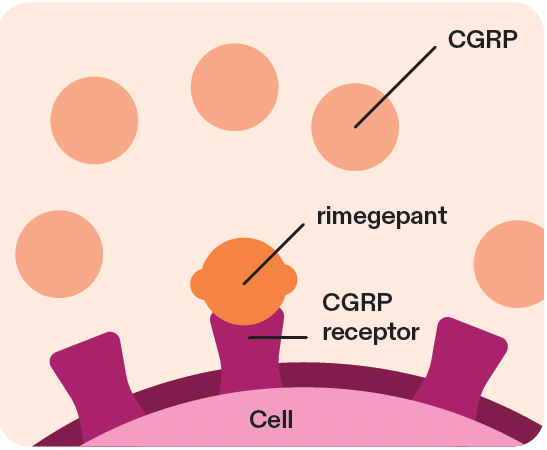
During migraine attacks, a protein called CGRP is released. CGRP attaches to receptors in the nerve cells of the brain causing inflammation and increased pain signals. Rimegepant works by blocking CGRP from attaching to these receptors, so they cannot detect the pain signals.
Tomorrow’s breakthroughs start today with you
Representation in trial participants is important in order to understand how potential medicines work in different people. Race, ethnicity, age, and sex can all impact how people respond to the same treatment.
When you participate in a clinical trial, you’re helping to represent both your community and all people who are affected by migraine. Your participation could make a difference.

Frequently asked questions
No, a placebo (inactive treatment) is not being used in this clinical trial. All participants will receive the active study medicine, rimegepant.
While all clinical trials come with some risks, participant safety is always the top priority. Clinical trials are reviewed and approved by committees responsible for protecting the rights and safety of all participants. These committees continue to regularly review the trial’s progress to ensure there are no unnecessary or excessive risks to participants.
The known and unknown risks of participating will be explained to you during the informed consent process that happens before you decide whether to participate.
As part of a clinical trial, your study-related medical care is provided by the study team at the location where you’re participating. This includes the principal investigator (or study doctor) — the healthcare professional who conducts and takes responsibility for the trial at that location — as well as other study team members.
During the clinical trial, you may also continue to see your regular medical doctors for any care that is not related to the study. It is important for you to tell your study team about other conditions you might have, and to let them know which other doctors are caring for you. This helps the study team coordinate your overall care.
If you participate, the clinical trial will provide study-related medical care, and your regular medical doctors will address the other aspects of your health. Your regular medical doctors can also work with the study team to understand the details of the study and any impact it may have on your regular medical care.
At the beginning and throughout this clinical trial, the study doctor will ask about your medical history, including any previous and current medications you are taking. You will have a physical exam, vital signs, ECG, and blood and urine tests done. The study team will give you more information about the tests and procedures during the review of the informed consent document (ICD).
Pfizer generally covers the cost of the study medicines and procedures that are part of our clinical trials.
Pfizer is also committed to reimbursing participants for reasonable clinical trial-related expenses such as transportation, parking, and meals.
We encourage you to ask the study team any questions you have. You can also refer to the informed consent document for the details about any costs for study participants and study-related reimbursement.
Participation is your choice. You can choose to leave the clinical trial at any time, for any reason.


