
Joining a clinical trial is a personal choice, and it’s yours to make.
Taking part may help you and could also help others who are living with a similar medical condition. Clinical trials follow clear steps to help protect participants and to learn whether a study medicine or vaccine is safe and if it works.
Clinical trials would not be possible without the people who take part, and we are committed to supporting every participant along the way.
Step-by-step guide to joining a clinical trial
An overview of what usually happens during a clinical trial
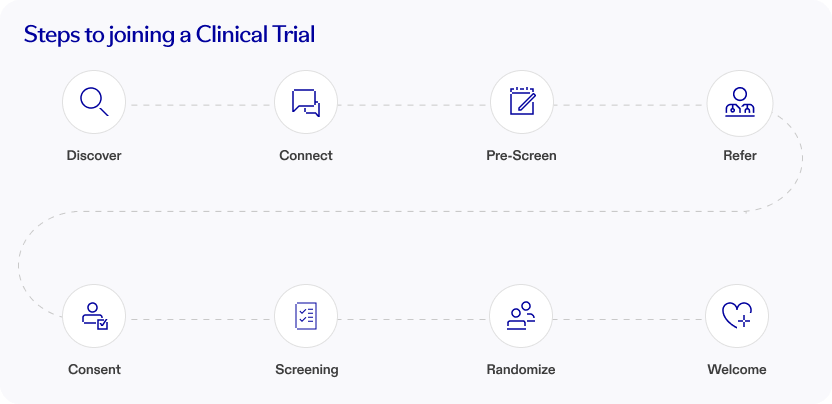
Learning about the clinical trial
You may first hear about a clinical trial through a variety of ways. Perhaps your doctor discussed a clinical trial with you, or perhaps you saw something online such as a social media post. Regardless of how you learned about a clinical trial, the first step is to learn what it is about, who it is for, and what you can expect. Ask your doctor if there is more information you can look at (brochure, video, or study website) to help you decide if you want to take the next step.
Pre-screening
If the clinical trial seems like a good fit, you may be asked a few questions about your health in a short online form or over the phone. This initial screening process is called pre-screening. Your responses help the study team with an early look on whether the clinical trial might be right for you.
If your answers show you might be a good match, someone from the study team will contact you to talk about the next steps. If your answers indicate that you may not be eligible for this study, you can always search for other clinical trials that might be a better fit on PfizerClinicalTrials.com or contact the study team directly. If you’d like to stay informed about Pfizer clinical trials and other research opportunities, consider joining PfizerConnect, our volunteer database for people who would like to be notified about research opportunities that may be right for them.

Informed consent
Before joining a clinical trial, the study doctor will review an Informed Consent Form with you. This document explains the purpose of the study, what will happen, possible risks and benefits, and your rights as a participant. You can ask as many questions as you want. Signing the form means you understand the information and agree to take part in the study, if you are eligible.
Screening
After you give consent, the study team may do medical tests like blood work, scans, or other health checks to confirm you meet the requirements for the clinical trial (also called eligibility). These steps help keep you safe and ensure the study collects appropriate information. Not everyone who is screened will be eligible to participate in the study, and that’s okay—you can always ask about other clinical trials.

Joining the clinical trial
If you are eligible to participate in the study and have given consent, you will be officially enrolled in the study. Some clinical trials use randomization, which means you are placed into a study group by chance (like flipping a coin).

Study participation
During this part of the clinical trial, participants follow the study plan. This may include receiving study treatment(s), attending study visits, or completing tests or surveys. The study team will be able to share more about the schedule of activities and may be able to provide a visit guide or appointment reminder card to help you keep track.
In some clinical trials, the study team will stay in touch for a while after the study's treatment period ends to check on your health and gather any final information. This may include phone calls or follow‑up visits. These check‑ins help researchers better understand long‑term effects.
Study results
A description of each clinical trial and the results are available on ClinicalTrials.gov, as required by U.S. Law. You can search this website at any time.
If you choose to participate in a Pfizer clinical trial, we invite you to join other alumni by registering at www.PfizerClinicalTrialAlumni.com where, among other things, you will have access to news, resources, and general study results (also known as the Plain Language Study Results Summary) as soon as they become available. For some studies, participants may access a portion of their individual data.


