Overweight and obesity are complex conditions that are frequently misunderstood. People often link them to lifestyle choices or a lack of willpower. These stereotypes create “weight bias,” unfair treatment, and judgment of people based on their size. This bias contributes to stress, anxiety, low self-esteem, and unhealthy coping behaviors, and may discourage individuals from seeking medical care.
Overweight and obesity increase the risks of developing serious, long-term health complications. However, even modest weight loss improves health outcomes and reduce the impact of weight-related conditions.
Fortunately, there is a growing recognition that living with overweight or obesity is not a personal choice but rather a serious medical condition and public health crisis. Through clinical trials, we are helping to advance potential breakthroughs that could help more people manage their weight and other weight-related health conditions.
What are overweight and obesity?
Overweight and obesity are metabolic conditions associated with excess body fat. They are caused by a combination of factors such as genetics, environment, behavior, hormones, other medical conditions, and certain medications.
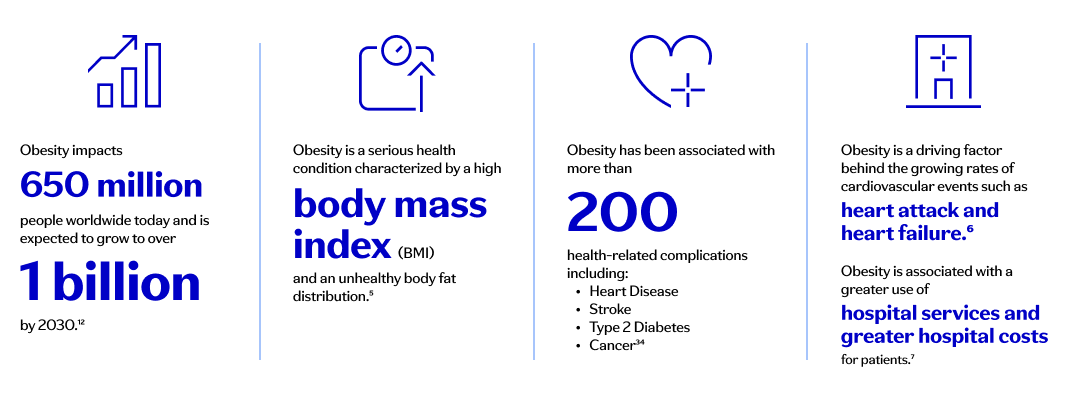
Not only does living with overweight or obesity impact your physical and emotional well-being, but they are linked to an increasing risk of health conditions such as cardiovascular disease, high blood pressure, type 2 diabetes, and other metabolic disorders. Many people don’t realize that managing excess weight is important in slowing down or stopping potential complications from other weight-related conditions.

How are overweight and obesity diagnosed?
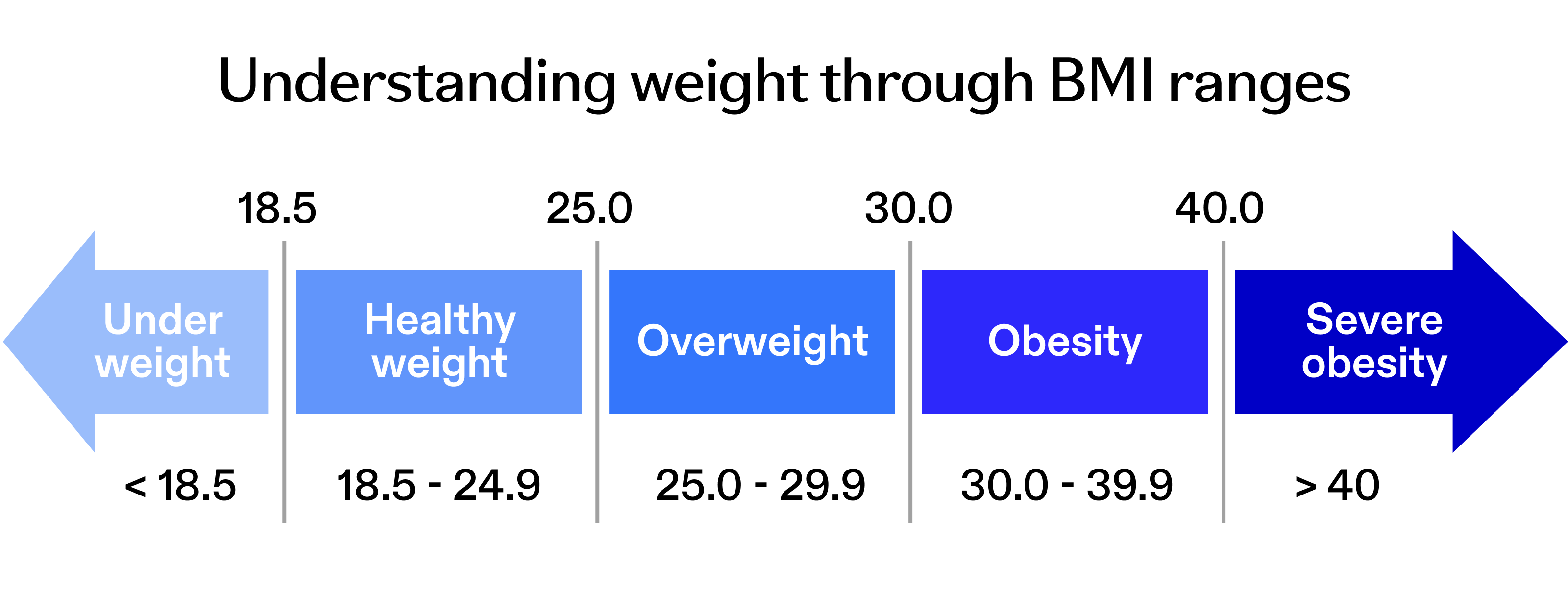
The most common way to diagnose overweight and obesity is body mass index (BMI), which measures the relationship between your height and weight. But BMI does not directly calculate body fat or fat distribution, or factor in things like muscle and bone mass. If you are concerned about your BMI, consider talking with your healthcare provider. They can help you understand what your number means for your overall health.
To calculate BMI, divide your weight in pounds by your height in inches squared, then multiply that number by 703.
BMI = | Weight (pounds) | x 703 |
Height in (inches)2 |
How common are overweight and obesity?
Overweight and obesity are global epidemics, affecting people worldwide. Women are slightly more likely to have overweight or obesity than men. Non-Hispanic Black adults are the most affected, followed by Hispanic/Latino adults, non-Hispanic White adults, and then non-Hispanic Asian adults. The likelihood of developing overweight or obesity increases with age.
Pfizer recognizes that to better understand the health needs and impact of our medicines, it is important that clinical trial participants represent the communities in which we conduct our trials and those disproportionately impacted by the diseases we aim to address. Many factors controlled by genetics, including race, ethnicity, and sex, can impact how people respond to a medicine. So, it's very important that weight management clinical trials include people of all backgrounds.
How are overweight and obesity treated?
While diet and exercise have been the standard recommendations for overweight and obesity, those alone are not always successful, and many people still struggle to lose or maintain a healthy weight. Additional options that go beyond lifestyle changes are needed, and several potential treatments are currently being explored in clinical trials including GLP-1 RAs (glucagon-like peptide-1 receptor agonists) and DACRAs (dual amylin and calcitonin receptor agonists). GLP-1 RAs and DACRAs work by mimicking the effect of hormones in your body that may help weight loss by increasing a feeling of fullness after eating, slowing down digestion, and helping to regulate blood sugar levels.